Matanat Teymurlu "Masterpieces of Western European Painting at the National Museum of Art of Azerbaijan"

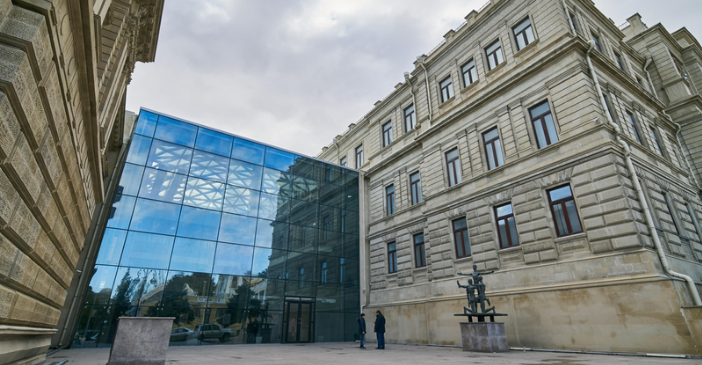 The National Museum of Art of Azerbaijan stands out for its rich collection, which reflects not only the national artistic heritage but also the most brilliant examples of world art. In this regard, the museum's Western European collection deserves special attention. This collection encompasses artworks belonging to various European countries -cultural centers such as Italy, France, Holland, Germany, and others. Rare examples of Western European art schools in painting, graphics, and decorative-applied arts have been brought together here. Enriching the museum's exposition, the collection holds immense value not only aesthetically but also historically and culturally. Serving as a valuable part of our national cultural heritage, the Western European collection of the National Museum of Art of Azerbaijan plays an important role as a cultural bridge by presenting masterpieces of world art to the local audience.
The National Museum of Art of Azerbaijan is a precious cultural sanctuary that preserves the national and universal cultural heritage formed from ancient times to the present day, transmitting these artistic gems to future generations. The foundation of the museum was laid in 1920 with the establishment of the Azerbaijan State Museum. A fine arts department functioned within this museum and was initially located in the former mansion of Haji Zeynalabdin Taghiyev. Later, as a result of the expansion of the funds, the independent Azerbaijan State Art Museum was established in 1936 based on this department. Its first exhibition opened in 1937 and operated at various addresses for a time, including the 5th floor of the National Museum of Azerbaijan Literature named after Nizami Ganjavi.
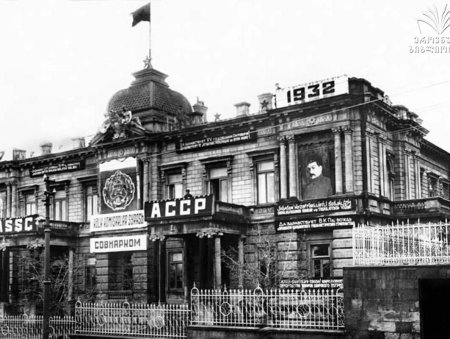
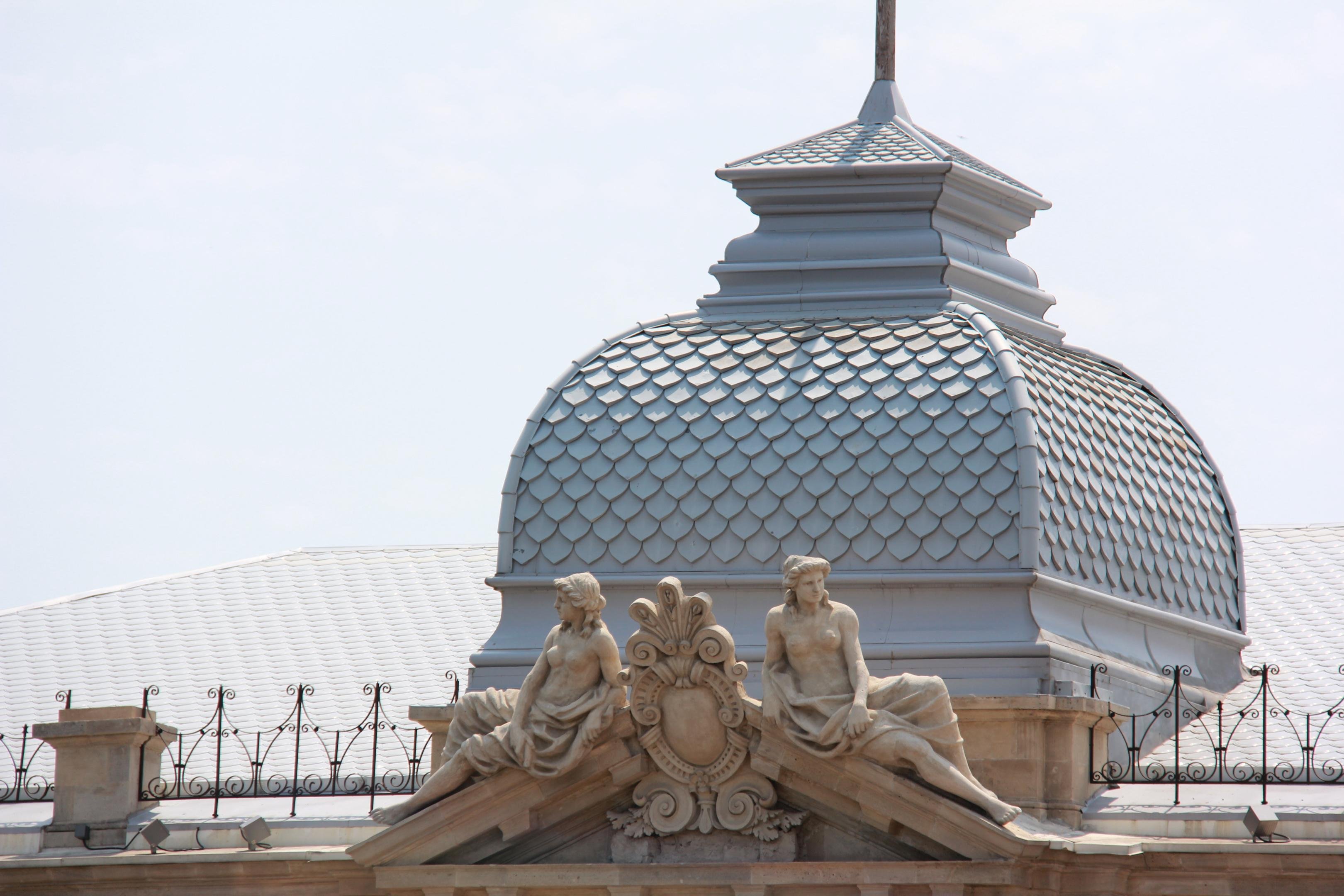 Since 1951, the museum has been housed in a late-19th-century architectural monument built on the initiative of Lev de Bour. This building was designed by the architect Nikolai von der Nonne and engineer Anton Kandinov. Although De Bour passed away before the start of construction, the building was sold by his family to the "Caspian Partnership" company and was used as both a residential and administrative building. Its elegant interior is decorated with classical motifs, Venetian mirrors, and arches.
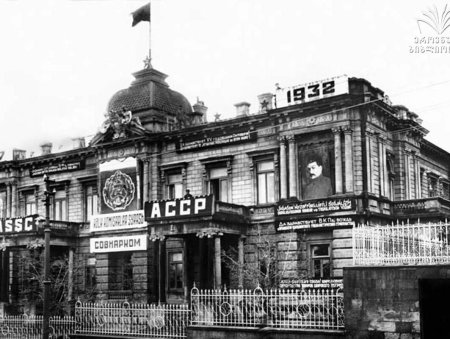
Another building occupied by the museum formerly belonged to the Mariinsky Female Gymnasium. The gymnasium was created in 1874 and later moved to a new building with the support of Azerbaijani oil industrialists. This structure was built based on the project of architect M.D. Botov, and after his death, von der Nonne continued the construction. During the Soviet period, city party organizations were located in this building, and from 1992 it was given for the use of the Art Museum.
In 2013, both historical buildings were connected by a modern glass and metal bridge transition, and modern art exhibitions began to be organized in the new central building.
From 1943 to 2011, the museum bore the name of the prominent artist Rustam Mustafayev. In 2011, by the decision of the Cabinet of Ministers of the Republic of Azerbaijan, the museum was granted "National" status. In the same year, the European Economic, Industrial and Commercial Chamber, located in Brussels, awarded the museum the European Museum Standard (EUMS) status as well.
More than 17 thousand exhibits are preserved in the museum's collection across the departments of "Painting", "Graphics", "Sculpture", "Embroidery", "Metalwork", and "Archaeological Ceramics and Porcelain". Here, alongside works belonging to various periods of Azerbaijani art, art specimens from Western Europe, Russia, and Eastern countries are displayed. The museum also possesses a rich collection dedicated to Russian avant-garde art and 16th–20th-century European painting.
In the 1950s, art historians working at the museum—Rasim Efendiyev, Nuraddin Habibov, Mursal Najafov, and Mammadagha Tarlanov- laid the foundation of Azerbaijani art history science. In subsequent years, People's Artists Salam Salamzade, Kazim Kazimzade, Ibrahim Zeynalov, and Chingiz Farzaliyev headed this cultural institution. Currently, the museum is led by Honored Cultural Worker, PhD in Art History, Associate Professor Shirin Melikova.
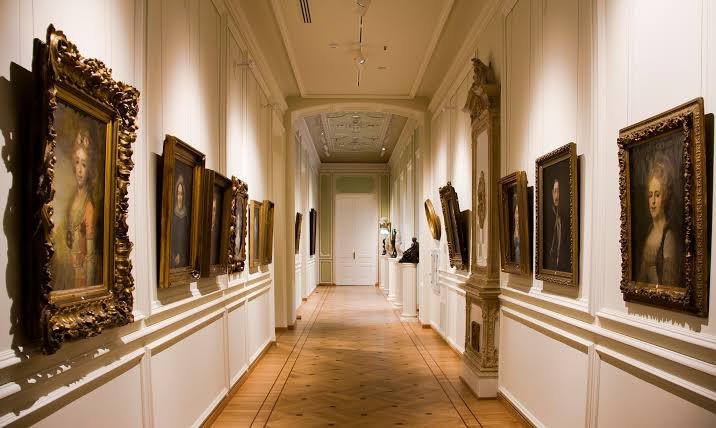 Western European Masterpieces of Painting at the National Museum of Art of Azerbaijan
The world art collection of the National Museum of Art of Azerbaijan is a rich assembly consisting of more than 8,000 exhibits. These rare art pieces encompass three main areas: Western European, Russian, and Eastern fine and decorative-applied arts. The Eastern collection is particularly striking from an aesthetic and craftsmanship perspective. Delicate examples of miniature painting, as well as ancient embroideries, garments, carpet weaving, ceramics, artistic metalwork, and wood carvings from Turkey and Iran are extensively featured in this section. Works reflecting the traditional art heritage of China, Japan, and India add special richness to the collection.
The Russian art collection covers the period starting from the 17th century up to the 20th century. In this section, the developmental stages through which Russian painting progressed can be followed sequentially. Works belonging to the avant-garde movement that emerged in the early 20th century make the museum's collection in this area even more valuable.
The world art collection of the museum covering the 16th–18th centuries is represented by rich examples belonging to Western European art movements such as the Renaissance, Baroque, Classicism, Rococo, and Romanticism. Artworks belonging to the major art centers of the period, such as Italy, Flanders, Holland, Germany, and France, are included in the collection. In this section, works by renowned artists such as Frans Hals, Justus Sustermans, Adriaen Brouwer, Adriaen van Ostade, Jacques Callot, Jean-Antoine Houdon, Jean-Baptiste Greuze, Fragonard, and Friedrich Kaulbach are exhibited.
Works by Italian Artists: The Renaissance Period
 Upon entering the Western European halls, we are greeted by a copy of Andrea del Sarto's work "Madonna of the Harpies". Andrea del Sarto was one of the most influential painters of his time and was called a "faultless painter" by Giorgio Vasari. Formed under the deep influence of Michelangelo and Raphael, his style provided a strong impetus to the 16th-century Florentine school of painting through its perfectly balanced composition and formal control, rendering him one of the pioneers of the Mannerism movement. Within his meticulously crafted compositional structure, the artist harmonized the pyramidal form characteristic of Raphael's Madonnas with the sculptural majesty of Michelangelo's figures, softening them with Leonardo da Vinci's delicate, shadowy color transitions. Among his pinnacle works are the "Birth of the Virgin" and the masterpiece "Madonna of the Harpies", completed in 1517. The original of the artwork is kept today in the Uffizi Gallery, while its copy adorns the entrance of the Western European halls.
The artwork "Madonna of the Harpies" was commissioned for the nuns of the Convent of Saint Francis de' Macci. According to the initial contract dated May 14, 1515, alongside the Virgin and Child, Saint John the Evangelist and Saint Bonaventure were to be depicted in the composition. However, in the final work, Saint Francis took the place of Bonaventure. The designer of the work's complex religious symbolism was Antonio di Ludoviko Sassolini, Minister of the Conventual Franciscans of Tuscany and an ardent supporter of Savonarola.
Iconographically, the work is rich in eschatological symbolism. Although Vasari traditionally interpreted the figures on the pedestal as harpies, modern critics state that they are the apocalyptic locusts described in Saint John's Book of Revelation. John is depicted beside Mary while writing his prophecies. According to Chapter 9 of the Book of Revelation, these creatures emerging from the bottomless pit come to torment those who do not bear the seal of "Tau" of God on their foreheads. Bonaventure, in his work, presents Saint Francis as the angel of that sixth seal. Thus, the pedestal on which Mary sits represents the bottomless pit, and Mary, through her divine presence, closes its mouth, triumphing over evil.
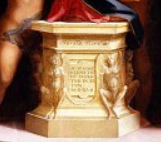 At the center of the pedestal is the inscription taken from a medieval hymn: "AD SUMMU[M] REGINA TRONU[M] DEFERTUR IN ALTUM" ("The Queen is taken up to the high throne above"). This inscription and the artist's signature symbolize Mary's status as the Queen of Heaven and her Assumption.
In 1704, this masterpiece was acquired from the convent by Ferdinando de' Medici, Grand Prince of Tuscany, to enrich the Palazzo Pitti collection. In exchange for this valuable painting, the Prince took upon himself the complete restoration of the convent and church, entrusting this task to the court architect Giovan Battista Foggini. Modern restoration work carried out in 1984 restored the original color richness of the artwork and the dynamic movement effect of the figures.
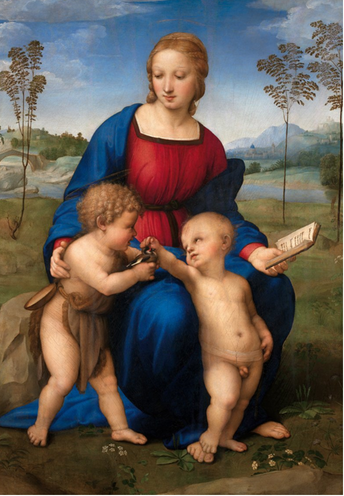 In the same hall, one of the most noteworthy and valuable exhibits of the museum is a high-quality copy of Raphael Sanzio's famous "Madonna of the Goldfinch" ("La Madonna del Cardellino"). The original of the work is also kept in the Uffizi Gallery. This painting reflects the perfect unity of aesthetic understanding and religious symbolism characteristic of Renaissance art.
According to Vasari, this canvas was prepared by Raphael in Florence for Lorenzo Nasi, a wealthy wool merchant, on the occasion of his marriage to Sandra Canigiani, a woman from the high bourgeoisie of Florence. The couple lived on Costa San Giorgio street, located on a steep incline, and on November 12, 1547, their house collapsed. Among the ruins, Raphael's painting was found broken into seventeen pieces, which were gathered to be restored. It is presumed that the restoration work was entrusted to Michele di Ridolfo del Ghirlandaio. Indeed, analyses conducted with X-rays showed that there are crack marks between these pieces, and they were joined with nails and completed with new paint. Vasari praises this work extensively and notes it as the only work by Raphael belonging to his Florentine period that is described in detail in the book "Lives of the Artists". In the composition, Mother Mary, the infant Jesus, and the young Saint John the Baptist are depicted against a natural landscape background. The scene where the infant Jesus receives the goldfinch from the hand of John is interpreted as a symbolic gesture pointing to Jesus's future sufferings. In Christian tradition, the red spot of the goldfinch represents the wounds Christ received while removing the crown of thorns.
According to one legend, while Jesus was being crucified, the crown of thorns on his head caused him great suffering. A little bird flew to his aid and began removing the thorns from his forehead with its beak to ease his agony. At that moment, a drop of Jesus's blood splashed onto the bird's forehead and chest. That sacred bloodstain permanently dyed the bird's feathers red.
Another legend says that on the night the infant Jesus was born, the fire in the stable was about to go out. Seeing the baby shivering from the cold, the little bird came to the fire. Fluttering its wings continuously, it blew on the embers and revived the flame. During this, sparks leaping from the fire burned the bird's chest, leaving a red mark there.
Raphael used a pyramidal composition to create harmony between the figures. There is a carefully constructed visual balance between the placement of the figures and their directions of gaze. The light and color transitions in the work clearly show the influence of Leonardo da Vinci. Raphael imparted delicate emotions and poetic depth to the figures, bringing the religious motif to a human level. Mary's serene and affectionate gaze emphasizes the emotional bond between mother and child. Jesus's thoughtful look and the childish smile on John create an emotional connection between the figures. The natural landscape in the background gives the scene an atmosphere of tranquility and eternity. This work is considered the embodiment of the mature stage in Raphael Sanzio's creativity and invites the viewer into deep reflection from both an artistic and spiritual perspective.
Works by Western European Artists: The Baroque Period
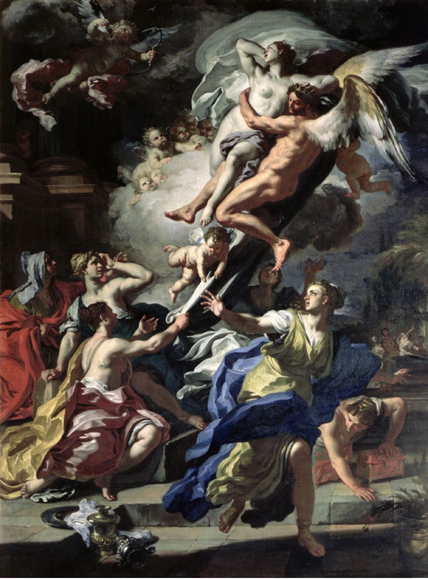 On the right wall of the Italian hall on the first floor of the museum, a replica of Francesco Solimena's work titled "The Rape of Orithyia" is displayed. Francesco Solimena (1657–1747) was one of the leading Italian painters of the Baroque period. His works are distinguished by a rich color palette, theatricality, and dramatic lighting effects. Solimena, who worked in Naples, was known for his monumental paintings with religious and mythological themes. His creativity played an important role in shaping the 18th-century Neapolitan school.
This composition is based on a replica from the 1730s of the original painting created by the master in 1701, and its storyline is taken from the work "Metamorphoses" by the ancient Roman poet Ovid. Boreas, the cold north wind god, unable to win the love of the beautiful princess Orithyia—one of the daughters of Erechtheus, King of Athens—through gentle means, returns to his wild and harsh nature. When Orithyia rejects his love, an enraged Boreas forcibly snatches the frightened young girl from among her court attendants. One day, while Orithyia is dancing with her mother on the banks of the Ilisos River, a strong wind rises; Boreas wraps Orithyia in dark clouds, carries her away to the rocks, and marries her. Twin sons and two daughters are born to them. Their sons, Zetes and Calais, become winged and strong like their father. Flying cupids (little gods of love) symbolize the passion that drives Boreas's action.
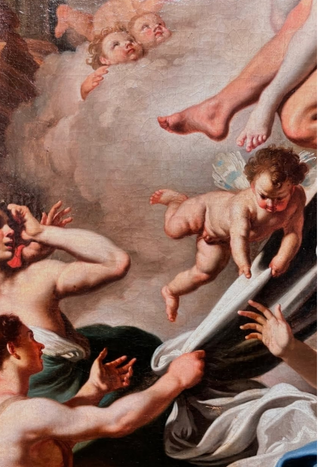 The work "The Abduction of Orithyia by Boreas" by Francesco Solimena, a brilliant representative of the Neapolitan school of painting, is executed in the Baroque style. Adorning the pediment of the Temple of Athena in Delos and frequently found on vase paintings, this mythological plot was also addressed in painting by famous artists such as P.P. Rubens and F. Boucher. Although the colors in the work appear somewhat muted, the dramatic execution of light and shade with flickering patches is a characteristic feature of Solimena's style. Copies of famous compositions were commissioned with great interest during that period for decorative purposes. The Neapolitan school was distinguished in Italian Baroque art by its dynamism, emotional expression, and strong light-shadow contrast. Artists of this school presented religious themes with great feeling and theatricality.
The scene of "Boreas Abducting Orithyia" decorates the pediment of the Temple of Athena in Delos and is frequently encountered in vase paintings. This scene was quite popular during the Italian Renaissance and Baroque periods. In European painting, artists such as A. Carracci, P. Rubens, C. Le Brun, and F. Boucher also touched upon this topic. Francesco Solimena approached this myth from an unconventional perspective, enriching it with aesthetic and symbolic depth.
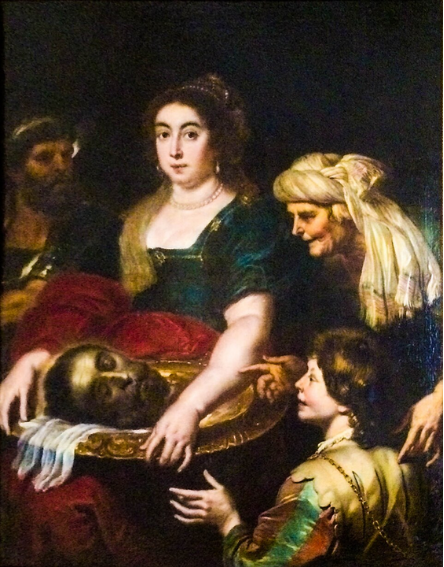 The work displayed in the second room located on the 1st floor is a painting titled "Salome", executed in oil on canvas by an unknown artist, belonging to the 17th-century Flemish school. According to the narratives recounted in the Gospel, the death of John the Baptist (Hazrati Yahya according to the religion of Islam) occurred as follows: John openly criticized Herod Antipas, ruler of the region of Galilee, for marrying Herodias, the wife of his brother. John considered this marriage unlawful and immoral, as Herodias was still considered the wife of Herod Antipas's brother.
Because of these criticisms, John was imprisoned. Herodias hated John and wanted him killed, but Herod Antipas hesitated to harm him due to the people's great respect for John and because he himself considered him a holy person. An opportunity arose at Herod Antipas's birthday celebration. Herodias's daughter Salome danced at the gathering, and this dance so captivated Herod Antipas that he swore to give Salome whatever she wished. Prompted by her mother, Salome requested the head of John. Bound by his oath, Herod Antipas was forced to fulfill this request, and John was executed in prison.
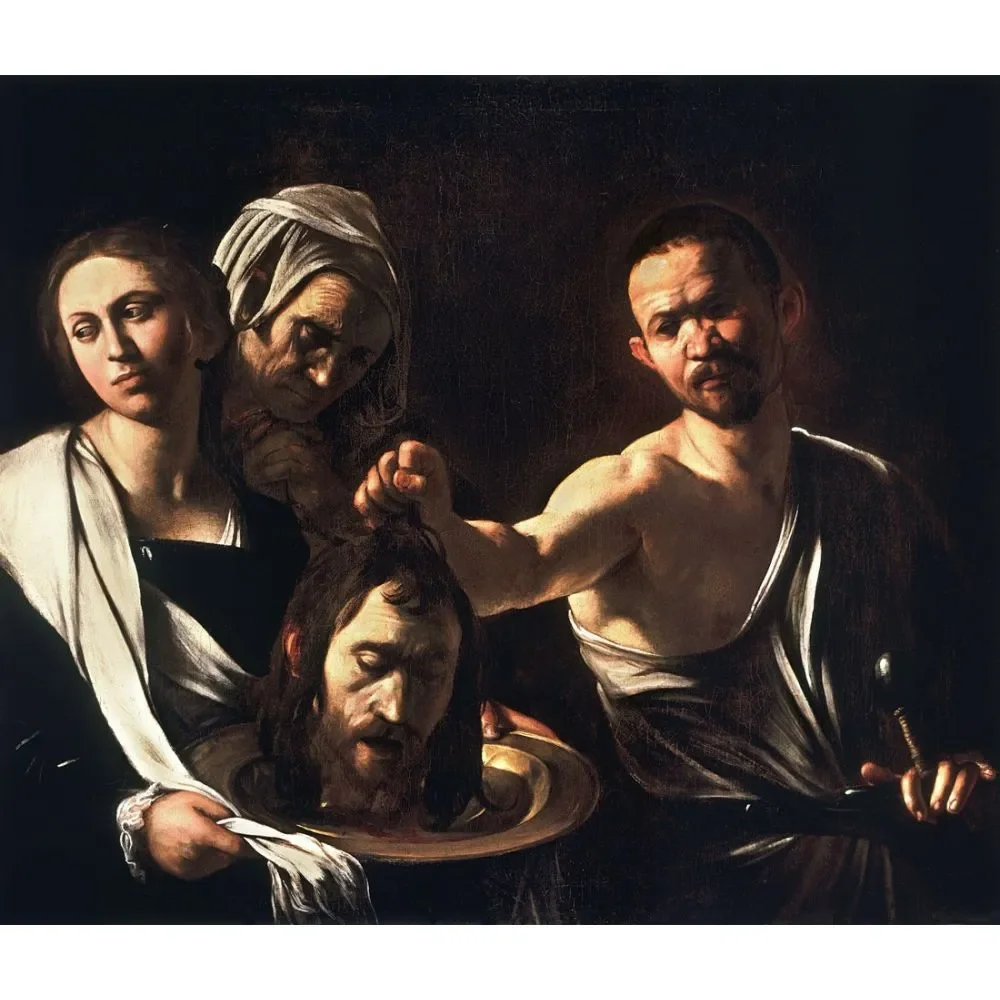 His severed head was presented to Salome on a platter, and she gave the head to her mother. In contrast to the gazes laden with tranquility and guilt observed in Caravaggio's two works with the same plot titled "Salome with the Head of John the Baptist", in some other similar compositions, such as "Judith Beheading Holofernes", a stronger emotional tension and drama are felt. One of the main differences between these two themes is whether John the Baptist's head is depicted with a halo (nimbus) or presenting it as a symbol of holiness by emitting light.
Another notable exhibit of the museum is a high-quality copy of the famous painting "Rest on the Flight into Egypt" by the Spanish artist Bartolomé Esteban Murillo, displayed among the halls located on the second floor. 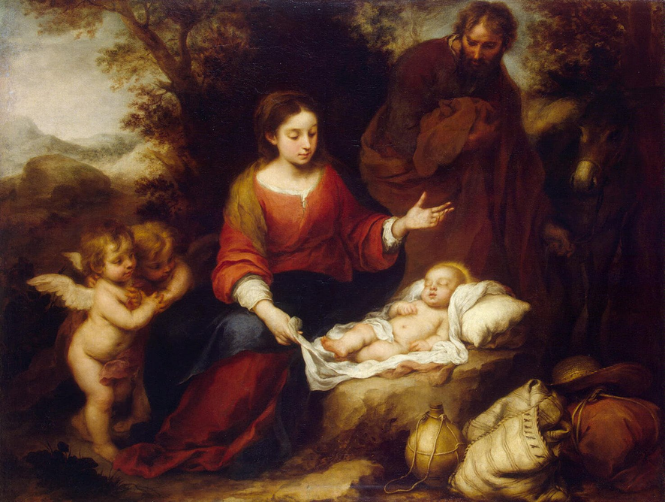 Murillo was one of the most respected and highly valued Spanish painters of his era. Independent of the church and royalty, he was able to gain both creative freedom and financial capability through private commissions. Murillo's birthplace, the city of Seville, was known as a center of art and culture during the Golden Age of Spain. Situated along the Guadalquivir River, this city stood out for its wealth, and talented master artists grew up here. Murillo began painting at the age of 15 and likely received his initial training in the workshop of Juan del Castillo. Soon he realized that creating works on religious themes was profitable from both a spiritual and material standpoint. Although mostly known for religious canvases, Murillo also produced successful works in portrait and genre painting. His genre-themed paintings are particularly distinguished by their modernity and delicacy.
In Murillo's early work, the influence of tenebrism that is, deep light-shadow contrasts is clearly felt. This technique was developed by Caravaggio and spread widely in Italy, Spain, and the Netherlands. Later on, Murillo transitioned to softer brushstrokes and bright, luminous compositions. Children and angels frequently appear in his works, which strengthens the emotional and ornate effect characteristic of Baroque art. From 1660 onward, Murillo's creativity entered a flourishing phase. In this stage, his works were distinguished by live models, a rich color palette, and soft compositional technique.
In line with the ideas of the Counter-Reformation period, he presented religious themes in a more human and accessible manner. His work titled "Rest on the Flight into Egypt" is a brilliant example of this approach. In this work, the holy family Mother Mary, the infant Jesus, and Joseph is depicted resting together with two angels while traveling away from danger. The composition is based on the event of the "Flight into Egypt" described in the Gospel of Matthew. Faced with King Herod's order to kill all children under two years of age, Joseph sets out toward Egypt with his family. This religious scene served as an inspiration source for artists for centuries; details such as the family's journey with a donkey and the accompaniment of angels found their place in works of art.
The strong chiaroscuro (light-shadow) effect characteristic of Baroque art is particularly noticeable in this painting by Murillo. Light is directed at the center of the composition upon the infant Jesus and Mother Mary. The relative darkness of the background ensures that the figures in the foreground appear more prominent and impactful. The artist's famous "misty" or "vaporous" technique is also felt here: brushstrokes are soft and fluid, and the outlines of the forms are sometimes imperceptible. This approach adds poetic lyricalness and a mystical atmosphere to the work. Murillo added human emotions, motherly love, the desire to protect, and tranquility to the religious scene here. Pyramidal composition, soft color transitions, and a presentation rich in human feelings render Murillo one of the unforgettable artists of the Baroque era.
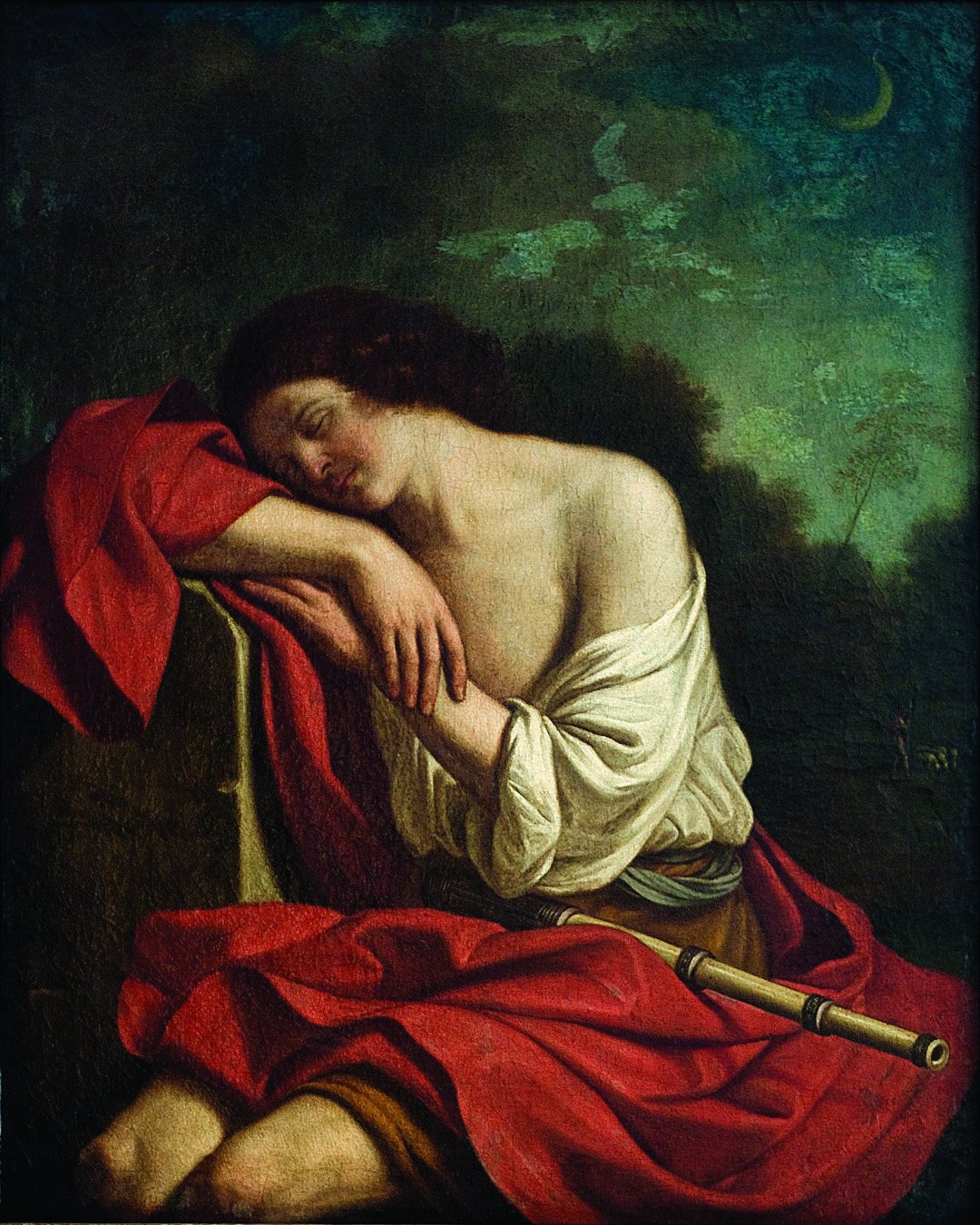 In the hall, the work "Endymion", executed in oil on canvas by Giovanni Francesco Barbieri, known by his nickname Guercino, a well-known representative of the Bolognese school of painting is displayed and completes the artistic charm of the hall.
Guercino was a famous Italian Baroque painter of the 17th century. Having started his artistic journey with strong naturalism, he later continued with a style based on classical balance and clarity. As a prolific painter, Guercino created more than 100 altarpieces and numerous drawings, being particularly distinguished by his rapid and fluid penwork. The fresco in which he brought the myth of "Aurora" to life is accepted as a demonstration of political and aesthetic power in response to his rival Guido Reni's more measured depiction. Despite having a lazy right eye, he was remembered for his mastery in expressing depth and his ability to play with light and shadow.
Endymion is known in ancient Greek mythology as a handsome shepherd, hunter, or king who lived in the Elis region. He was the son of Zeus and was said to possess extraordinary beauty. Selene, the Titan goddess of the Moon, fell in love with him and asked Zeus to grant Endymion eternal youth. Zeus fulfilled this wish and plunged Endymion into an eternal sleep. Selene and Endymion had fifty daughters. According to another source, Endymion married Asterodia or Chromia and had several sons and a daughter. He told his sons to join a race to ascend the throne; Epeios emerged victorious and became the ruler of the region, one of his brothers, Aetolus, remained at home, while the other brother, Paeon, angered by his defeat, went into exile. Guercino, with this work, highlights the emotional aspect of the mythological theme while also prompting the viewer to reflect on themes of inner solitude, eternal beauty, and divine love. Furthermore, the artist bestowed feminine beauty and delicacy upon the figure.
Masters of the Art of Portraiture: Friedrich August von Kaulbach and Jean-Joseph Benjamin-Constant
On the second floor of the museum, in the German hall, the portraits of "Empress Alexandra Feodorovna" and "Grand Duchess Elizabeth Feodorovna" by the German artist Friedrich August von Kaulbach, as well as the portrait of "Grand Duchess Elizabeth Feodorovna" by the French artist Jean-Joseph Benjamin-Constant, are counted among the distinguished works of the National Museum of Art of Azerbaijan. In the Russian Empire, painting emperor portraits from life was not granted to every artist. They mainly painted canvases of the Tsar and members of his family. Friedrich August Kaulbach was dubbed the "Prince of Painters" alongside Franz von Lenbach and Franz von Stuck as one of the most influential artists of Munich at the beginning of the 20th century. He was awarded a noble title for his achievements in the art of portraiture and his contributions to Munich's artistic life, leading a bourgeois-aristocratic lifestyle in his lavishly decorated villa. Although Kaulbach's work drew inspiration from the traditions of old masters, he sought to reconcile the classical style with the aesthetic demands of his era. His works reflect the influence of artistic movements ranging from Historicism (an artistic trend based on the revival of past art styles) to Jugendstil (a modern style featuring decorative lines and fluid forms based on nature motifs), artfully immortalizing the face of the social elite at the beginning of the 20th century.
Puffy sleeves, which were in fashion at that time, brought the slender waist in the female silhouette further into focus, creating a special aesthetic balance in the portrait. In the folds of the thick train executed by Kaulbach's brush, the fine play of light and color conducted by the artist demonstrates his professionalism as a master of color. Using various shades, the artist delicately expressed the rich luster of the fabric, while conveying the model's inner tranquility and spiritual harmony to the viewer through a highly poetic style of expression.
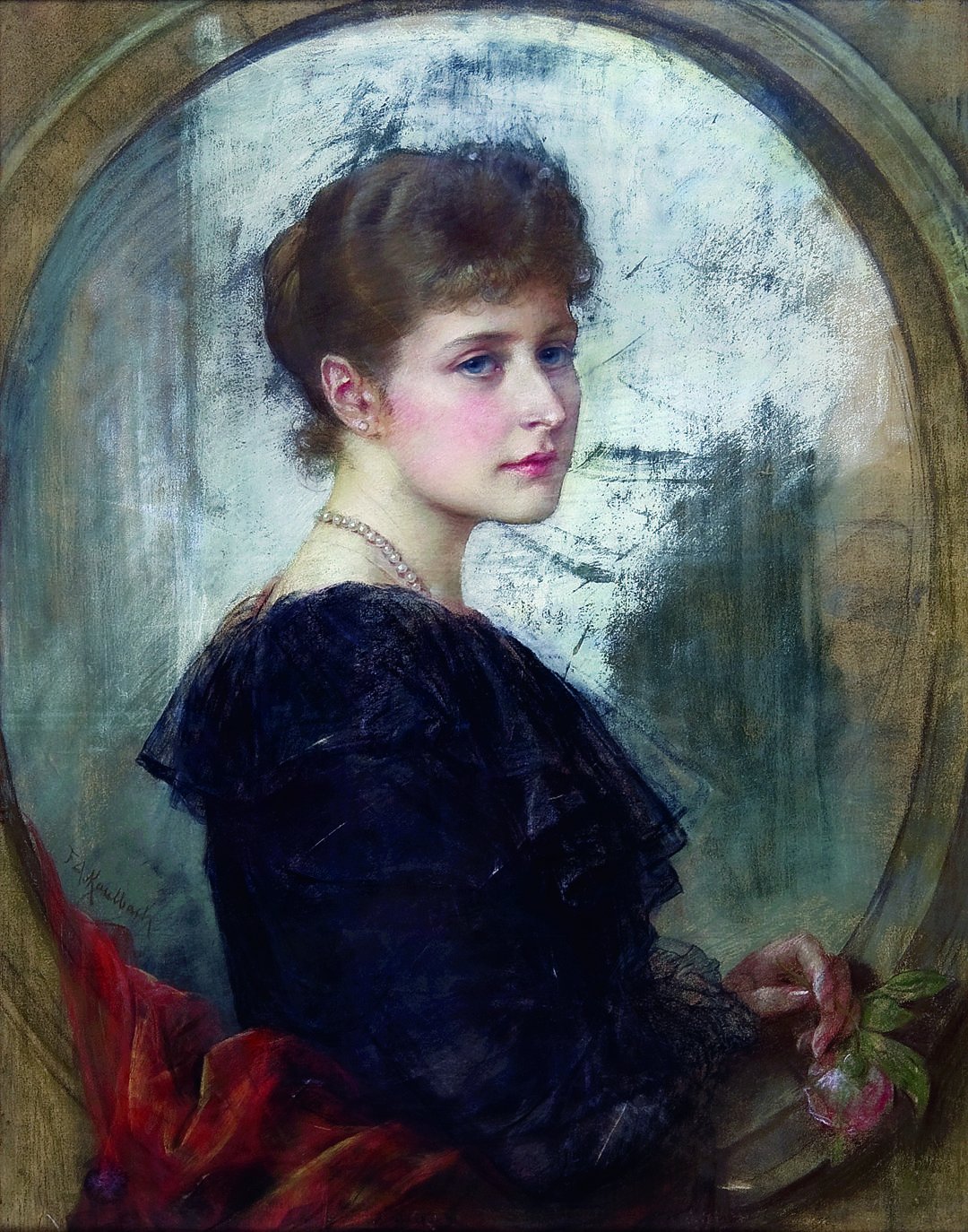 Portrait of "Empress Alexandra Feodorovna"
Among his canvases painted for the Romanov family, we can note the portrait of "Empress Alexandra Feodorovna", which currently adorns the exposition of the German hall of the National Museum of Art of Azerbaijan. Dating to approximately 1894–96, the portrait of "Empress Alexandra Feodorovna" stands out for its unusual composition and delicate execution technique. Friedrich's other work displayed in the museum (Graphics/Canvas, Pastel) is also a portrait of Alexandra Feodorovna (1872–1918).
The last empress of the Russian Empire was the granddaughter of Queen Victoria of England, and her original name was Alix of Hesse-Darmstadt. After marrying Nicholas II in 1894, she accepted Orthodoxy and assumed the title of Empress. They had five children, but the hemophilia condition of the heir, Alexei, became a heavy trial for the family. Due to her quiet, reserved nature and foreign origin, Alexandra was accepted with difficulty in Russian society. Owing to her son's illness, her inclination toward mysticism and her attachment to Rasputin made her even more a target of criticism. During World War I, her influence on state administration was evaluated negatively. Following the 1917 revolution, the Tsar's family was arrested and executed in 1918. In the portrait, the Empress is depicted within a circular frame, turning her head toward the viewer at a 3/4 angle and directing her gaze forward. Concern, anxiety, and anticipation are felt in her gaze, bringing the human aspect of the figure to the fore. By neutralizing the background with a light tone and simple strokes, the artist focused attention on the delicate face and graceful posture of the Empress.
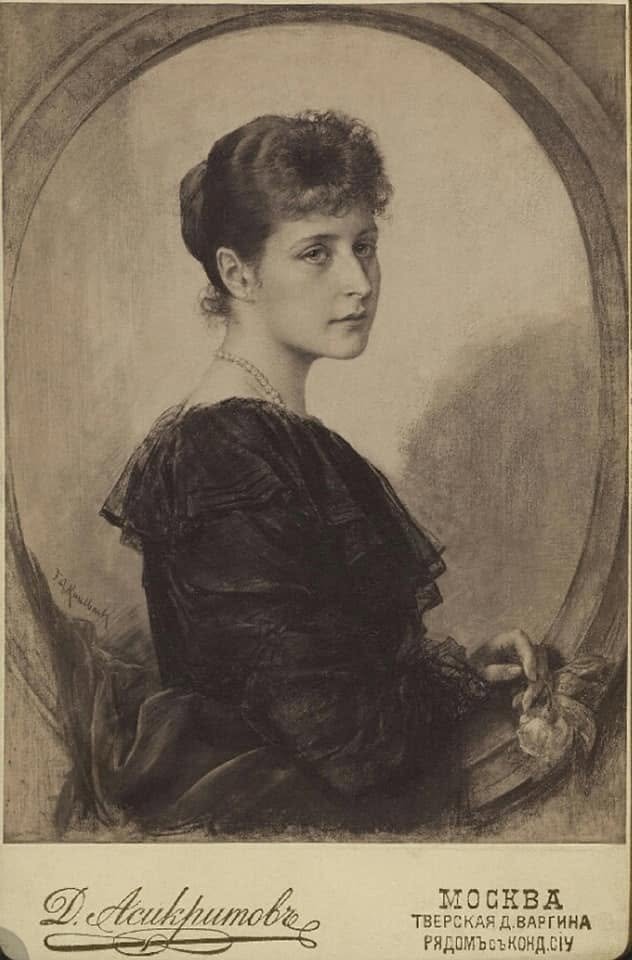 Kaulbach extended one of the young woman's arms and her hand holding a flower beyond the edge of the frame; with this technique, he added spontaneity and dynamism to the portrait. This compositional style is not found in his other portraits, reflecting the special attention the master gave to this work.
It is presumed that the initial location of the artwork was the sitting room of Elizabeth Feodorovna, the wife of Sergei Alexandrovich, the Governor-General of Moscow, and the Empress's sister. After the revolution, the work entered the collection of Pavel Ivanovich Kharitonenko, and from there it was transferred to the State Tretyakov Gallery. In November 1935, it entered the collection of the National Museum of Art of Azerbaijan.
A photograph of the portrait was taken by the well-known court photographer Daniil Mikhailovich Asikritov. This photograph was approved by Emperor Nicholas II and displayed in the sitting room of the Hunting Lodge in Sarikamish. This fact demonstrates both the artistic and personal emotional value of the portrait.
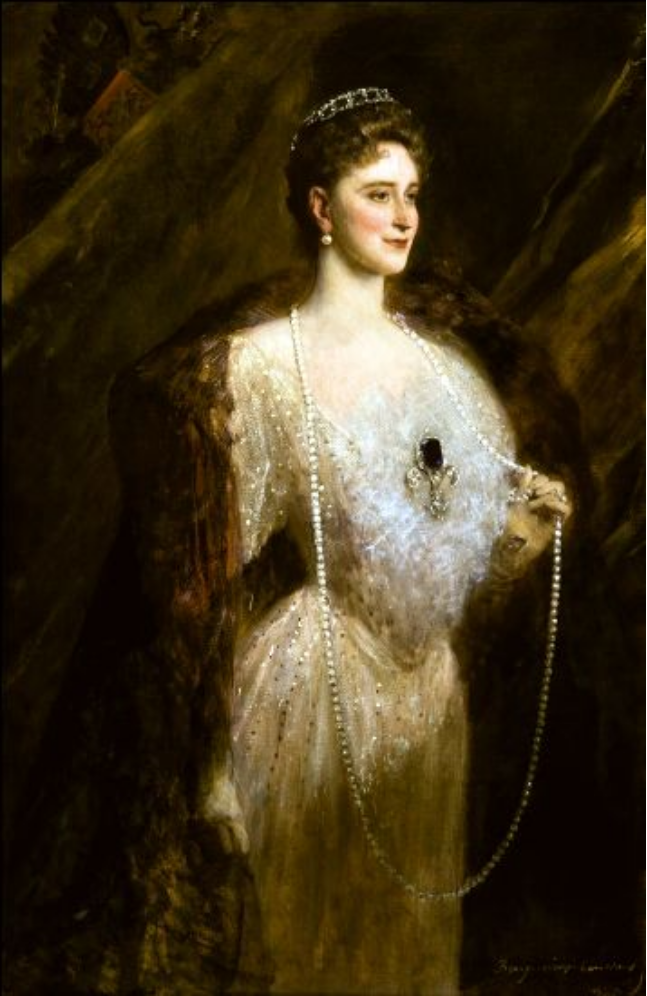 In the same hall, there is also a portrait of Grand Duchess Elizabeth Feodorovna Romanova painted by Jean-Joseph Benjamin-Constant.
Grand Duchess Elizabeth Feodorovna (1864–1918) was the biological elder sister of Alexandra Feodorovna and the wife of Grand Duke Sergei Alexandrovich (brother of Emperor Alexander III). After her husband was assassinated in 1905, she renounced worldly life, spent her wealth on charity, and founded the Marfo-Mariinsky Convent (Convent of Saints Martha and Mary) in Moscow. Having dedicated her life to caring for the homeless, the sick, and orphans, Elizabeth Feodorovna was also murdered by the Bolsheviks in 1918 by being thrown alive into a mineshaft in Alapayevsk. She was canonized as a saint by the Orthodox Church.
Dreamy portraits painted in the 19th-century French style and richly decorated predominate in Kaulbach's work. The artist gave a special place to female portraits in his oeuvre. F.A. von Kaulbach was very famous in Russia and Europe.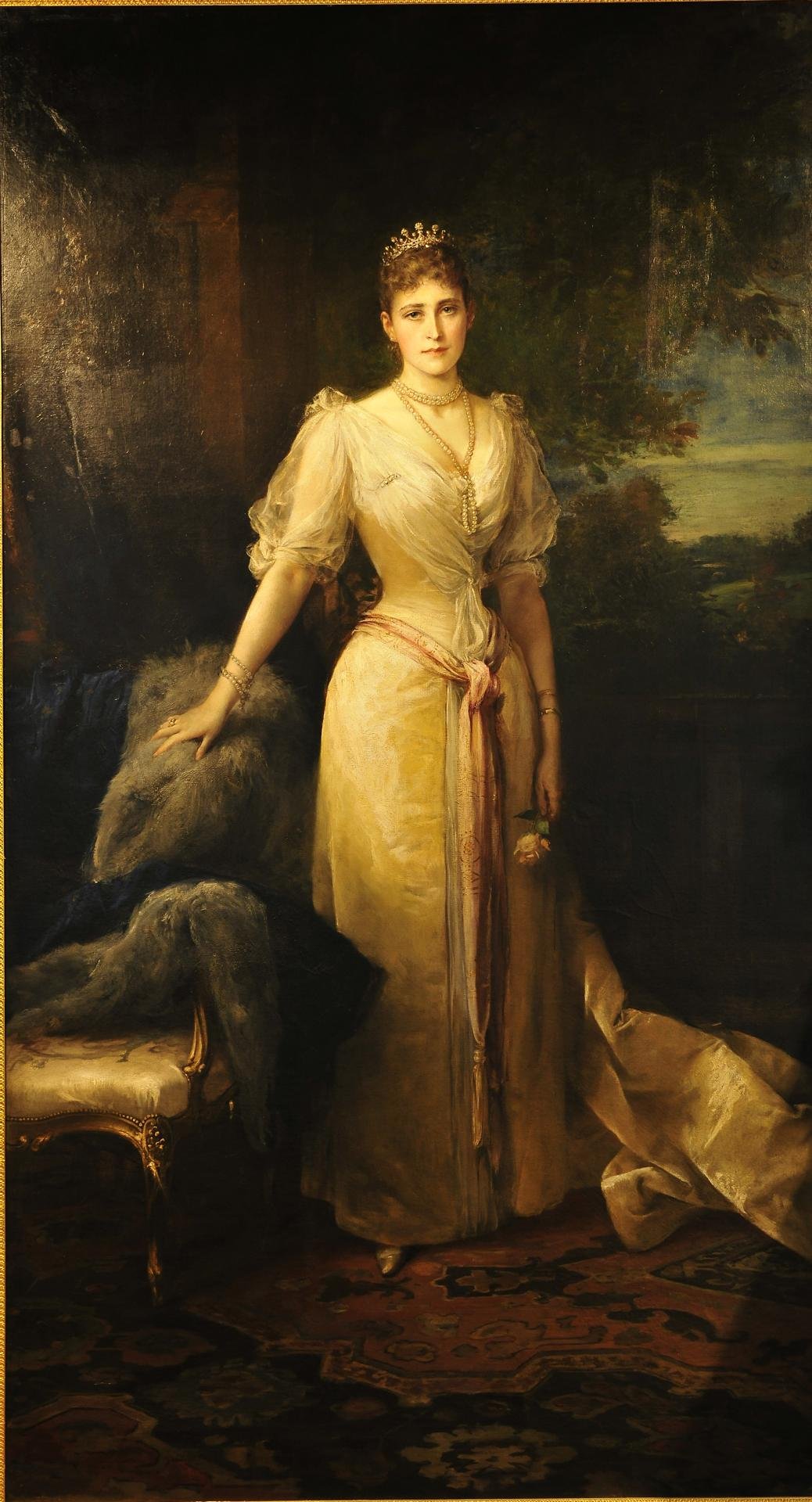 Therefore, along with painting portraits of the imperial family, he also gave them painting lessons. The artists' portraits are valuable not only from an artistic perspective but also as a mirror of the socio-cultural strata of their time. To enhance the visual impact of the image, the artist approached the texture of the silk dress and the delicate folds of the fabric layers with meticulous care. Such rich coloristic solutions belonging to masters and the subtle nuances of the figures' inner worlds elevate the portrait art section in the museum to a high artistic level.
The examples of Western European painting displayed at the National Museum of Art of Azerbaijan bring the rare gems of world art history closer to our country, encouraging the viewer to engage in live contact with this cultural heritage. The works belonging to Italian, French, Dutch, Flemish, and other Western European schools included in the museum's collection reflect not only aesthetic beauty but also the social, religious, and cultural contexts of their respective eras.